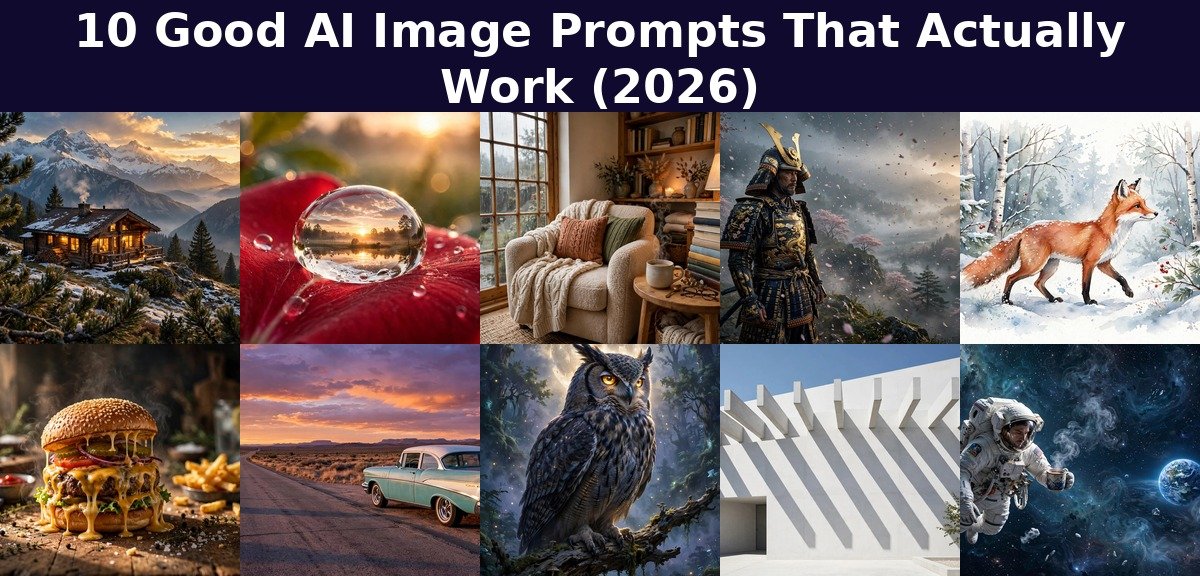
Intro
Good AI image prompts are specific. “A dog” gives you a random dog, but “a golden retriever puppy splashing through autumn leaves at golden hour” gives you a masterpiece. Below are 10 proven prompts with real examples. Copy them, study them, remix them.
How to Use These Good AI Image Prompts
Before you dive in, here’s how to get the most out of this guide:
- Copy the full prompt: paste it exactly as written into your AI image generator of choice.
- Read the “Why it works” section: each breakdown teaches one prompting principle you can reuse forever.
- Works everywhere: these prompts use plain language, no generator-specific syntax, so they run in Midjourney, ChatGPT, Gemini, and Meta AI alike.
- Swap one element at a time: change the subject but keep the style words to learn how each part of a prompt behaves.
- Generate 2–4 variations: AI is non-deterministic; the first result is rarely the best one.
- Build your own formula: by prompt #10 you’ll have the full toolkit: subject, style, lighting, mood, and finishing details.
Pro tip: A good prompt reads like a short, vivid description you’d give a human photographer or illustrator. If a person couldn’t picture it from the words alone, the AI can’t either.
10 Good AI Image Prompts (With Prompt Anatomy)
1. Golden Hour Mountain Cabin
The prompt:
cozy wooden cabin in the mountains at golden hour, warm light glowing from the windows, snow-capped peaks behind, pine trees in the foreground, cinematic landscape photography, wide composition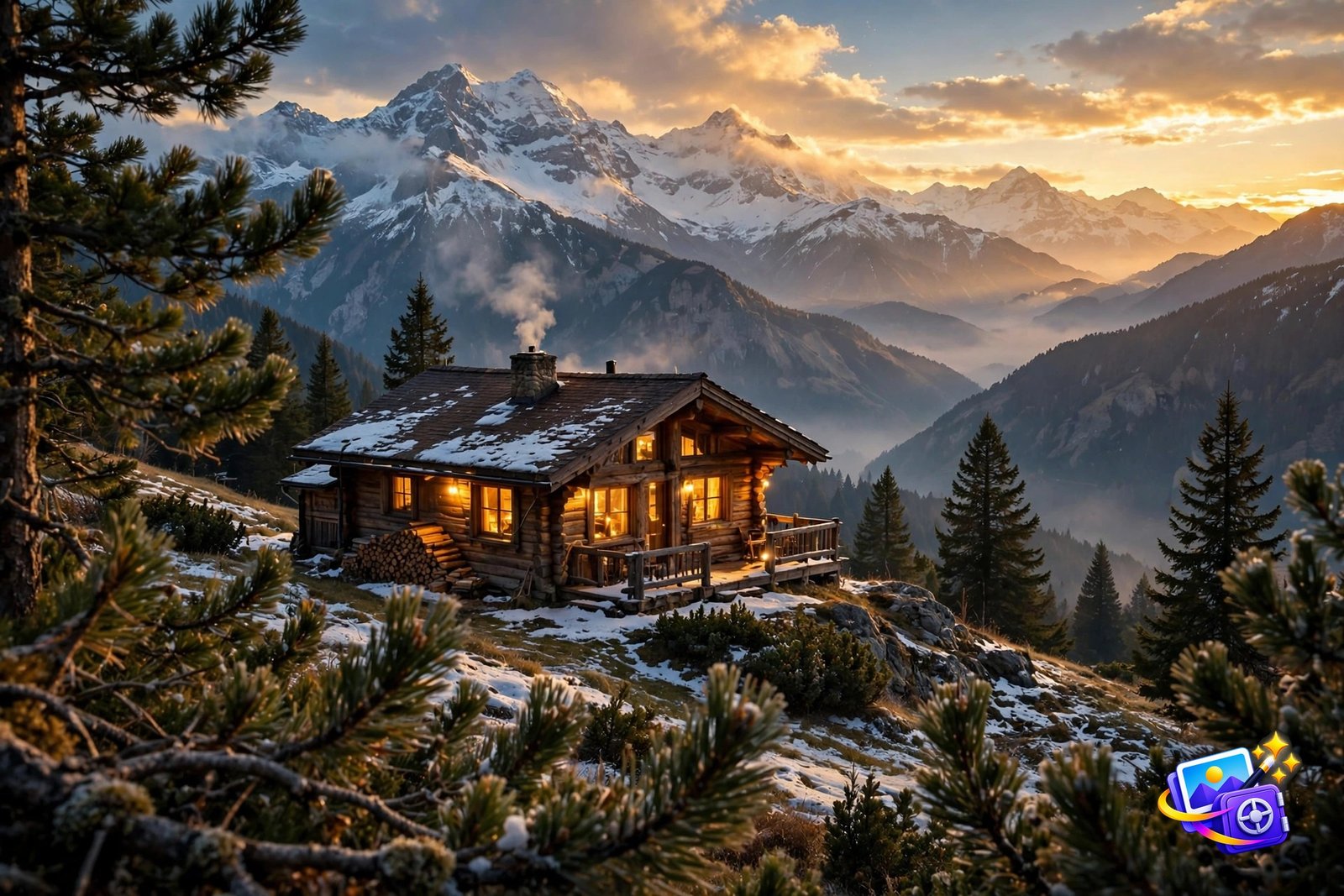
Why it works: This is the classic “lighting does the work” entry among good AI image prompts. “Golden hour” alone transforms an ordinary cabin scene into a cinematic one, telling the AI exactly which warm, directional light to paint. Layering foreground (pines), subject (cabin), and background (peaks) gives the composition natural depth instead of a flat postcard.
Modify it: Swap “golden hour” for “blue hour” or “misty morning” and watch the entire mood change while the composition stays intact.
2. Macro Dewdrop on a Rose
The prompt:
extreme macro photograph of a single dewdrop on a red rose petal reflecting a sunrise, ultra-sharp detail, soft bokeh background, professional nature photography, wide composition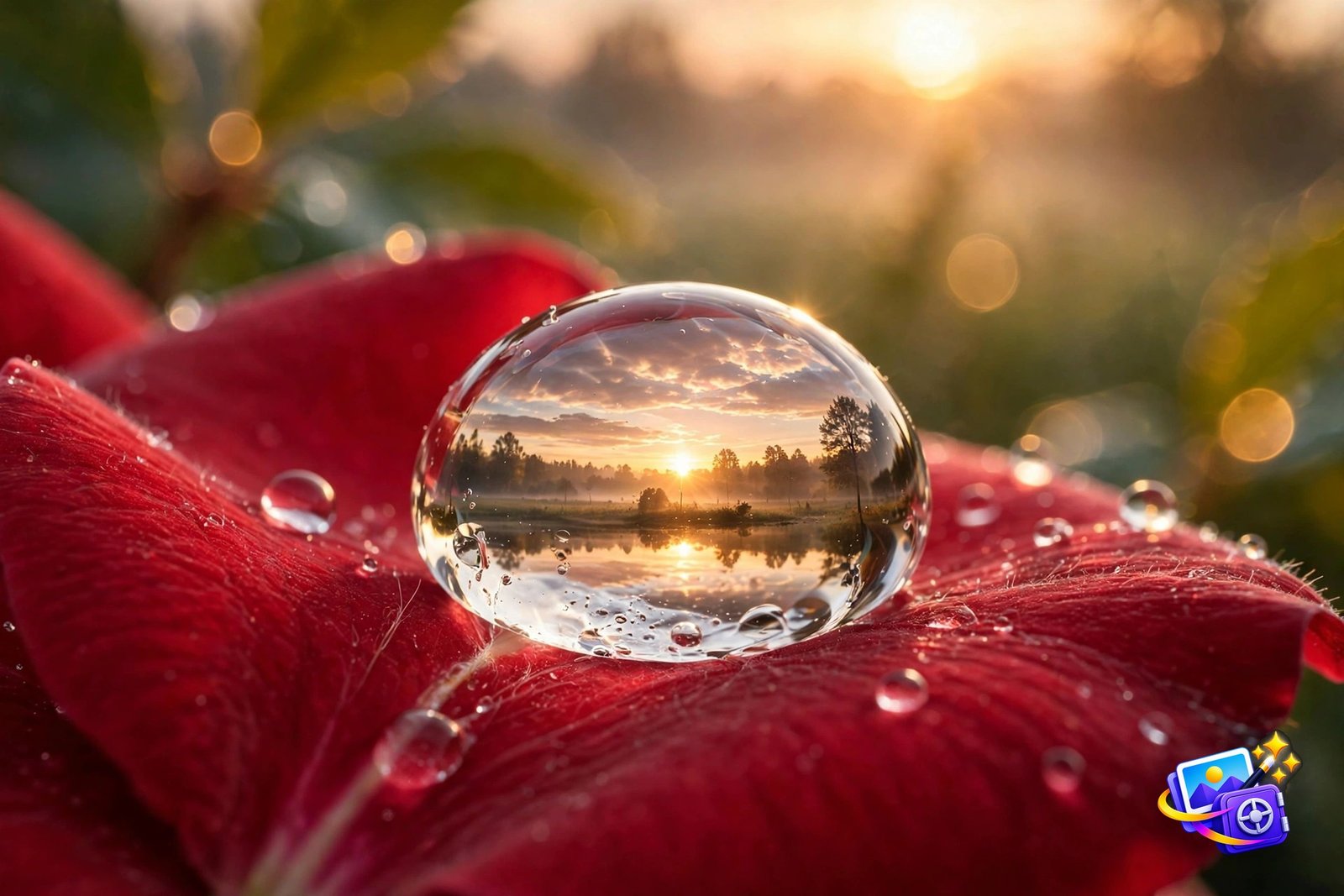
Why it works: The best good AI image prompts for macro name the scale (“extreme macro”) AND the tiny story inside it (a sunrise reflected in the droplet). “Ultra-sharp detail” plus “soft bokeh background” is the classic macro contrast: tack-sharp subject against a creamy blur, which is exactly how real macro lenses behave.
Modify it: Try “dewdrop on a spider web,” “frost crystals on a window,” or “a ladybug on a leaf”; the macro formula works on any tiny subject.
3. Cozy Reading Nook
The prompt:
cozy reading nook beside a rainy window, plush armchair with a knitted blanket, tall stack of books, steaming cup of coffee on a side table, warm lamp glow, hygge interior photography, wide composition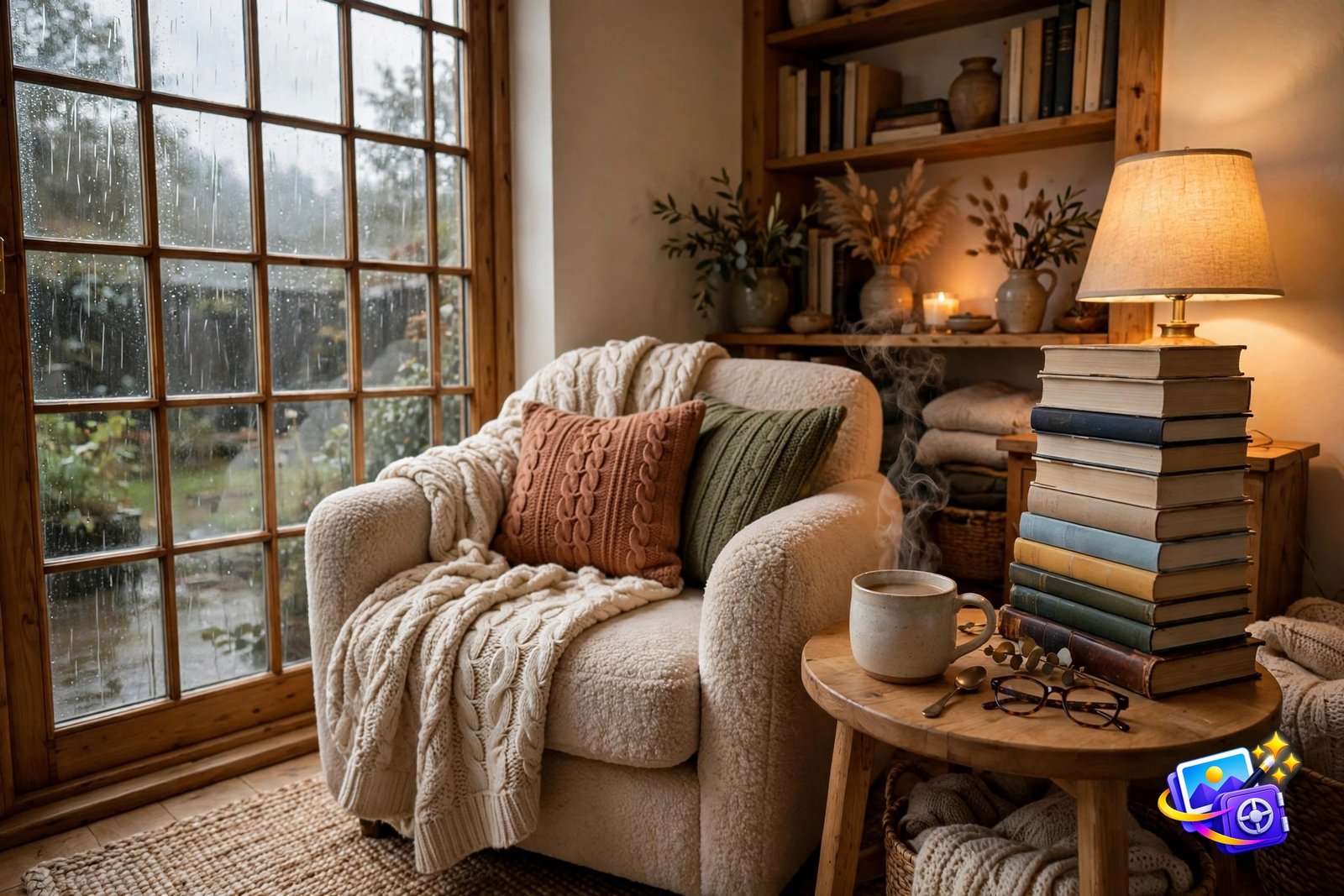
Why it works: This is a masterclass in sensory stacking, exactly what good AI image prompts do: every noun adds texture you can almost feel: knitted blanket, steaming coffee, warm lamp glow. “Hygge” is a single word that bundles an entire aesthetic (Danish coziness) the AI already understands. The rainy window outside contrasts with the warmth inside, creating emotional depth.
Modify it: Change the season (“snowy window,” “autumn rain”) or the drink (“steaming tea,” “hot chocolate with marshmallows”).
4. Cinematic Samurai in Cherry Blossoms
The prompt:
cinematic portrait of a samurai in ornate armor standing in falling cherry blossom petals, dramatic fog, moody rim lighting, epic film still, photorealistic, wide composition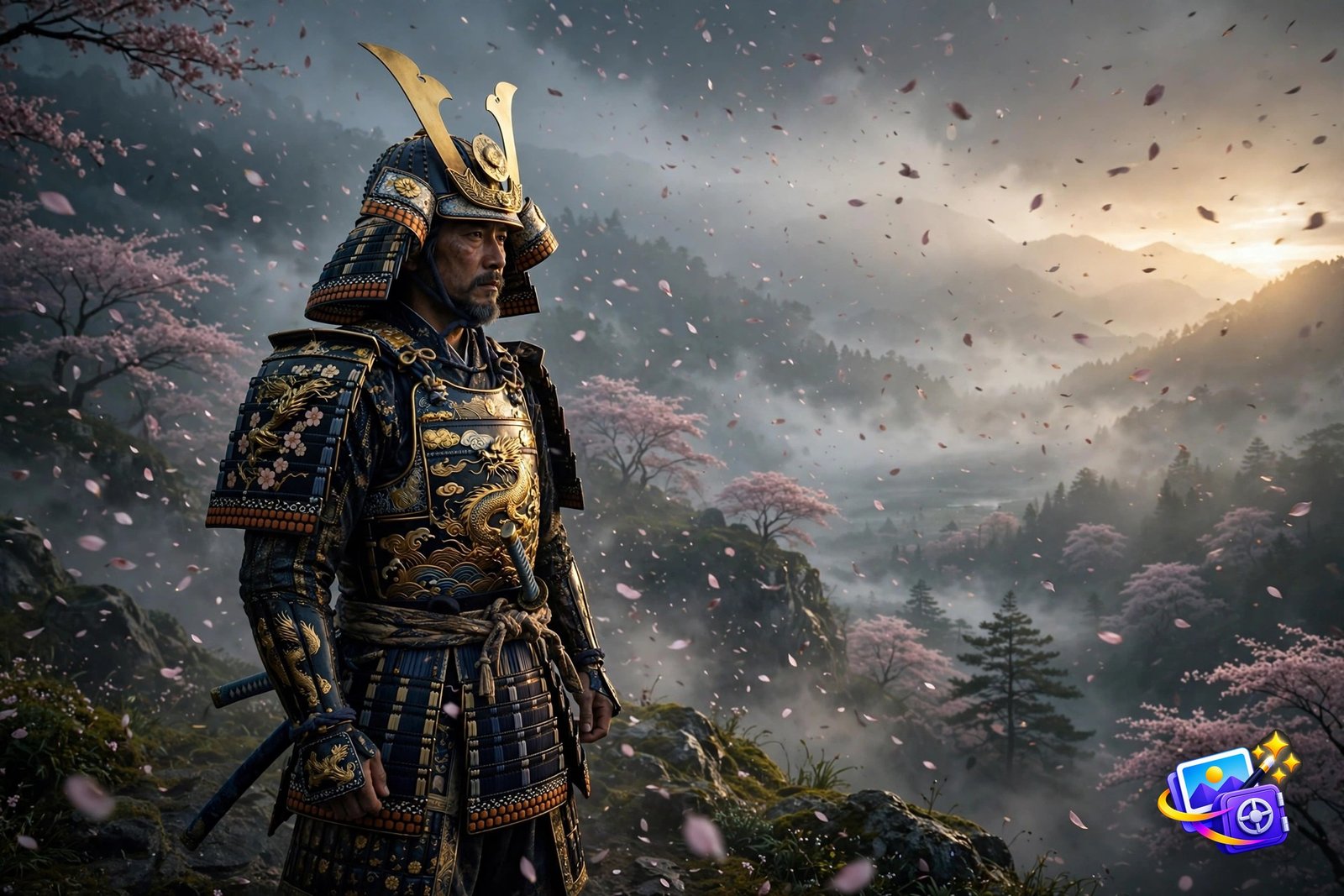
Why it works: Among good AI image prompts, “epic film still” is doing quiet heavy lifting here. It tells the AI to compose like a movie frame, with dramatic weight and intentional framing. Motion (“falling petals”) plus atmosphere (“dramatic fog”) plus light (“moody rim lighting”) is the cinematic triple-stack that separates film-still quality from a flat character render.
Modify it: Keep the formula and change the warrior: “cinematic portrait of a viking in falling snow” or “a knight in a burning castle courtyard.”
5. Watercolor Fox in Snow
The prompt:
delicate watercolor illustration of a red fox walking through a snowy forest, soft washes of color, paint splatter details, storybook art style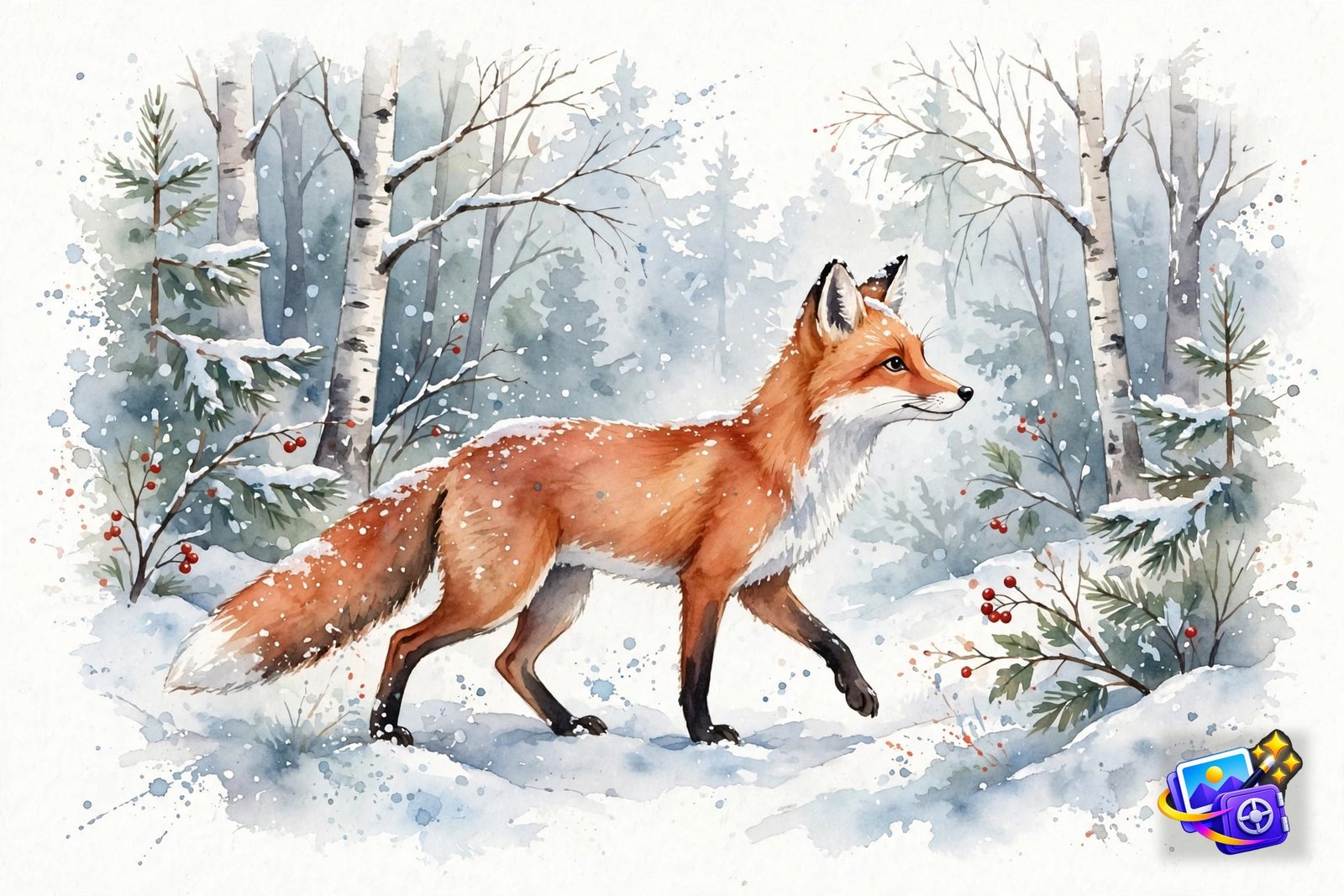
Why it works: Medium-first prompting is a hallmark of good AI image prompts. Leading with “delicate watercolor illustration” sets the entire rendering engine before the subject even appears. Technique words (“soft washes,” “paint splatter”) tell the AI HOW to paint, not just what to paint. Without them you’d get a generic digital fox; with them, you get authentic watercolor texture.
Modify it: Any animal works in this formula (“watercolor owl,” “watercolor deer,” “watercolor rabbit”), or change the season to “autumn forest.”
6. Gourmet Cheeseburger
The prompt:
gourmet cheeseburger food photography, melting cheese dripping down, sesame bun, rustic wooden table, dramatic side lighting, faint steam rising, ultra appetizing, wide composition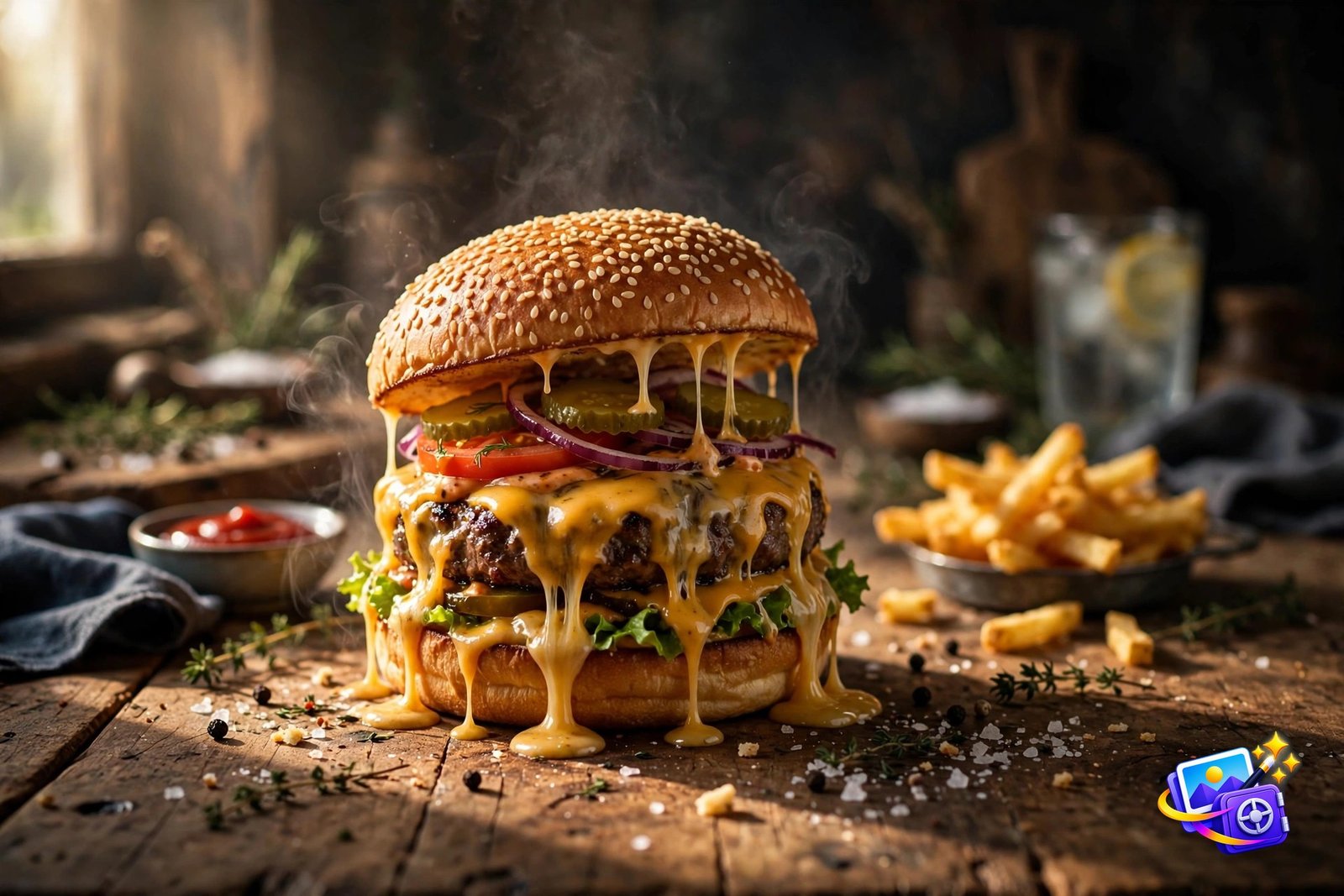
Why it works: Good AI image prompts for food photography live or die on appetite triggers, and this one stacks them: melting cheese, dripping, steam rising. “Dramatic side lighting” is the professional food-photography secret. It creates the highlights and shadows that make food look three-dimensional and craveable instead of flat and dull.
Modify it: The formula ports to any dish: “gourmet pizza,” “ramen bowl with steam,” “chocolate lava cake.” Keep the lighting and appetite words.
7. Vintage Car at Desert Sunset
The prompt:
vintage classic American car parked on an empty desert road at sunset, long shadows, orange and purple sky, nostalgic Americana photography, wide cinematic composition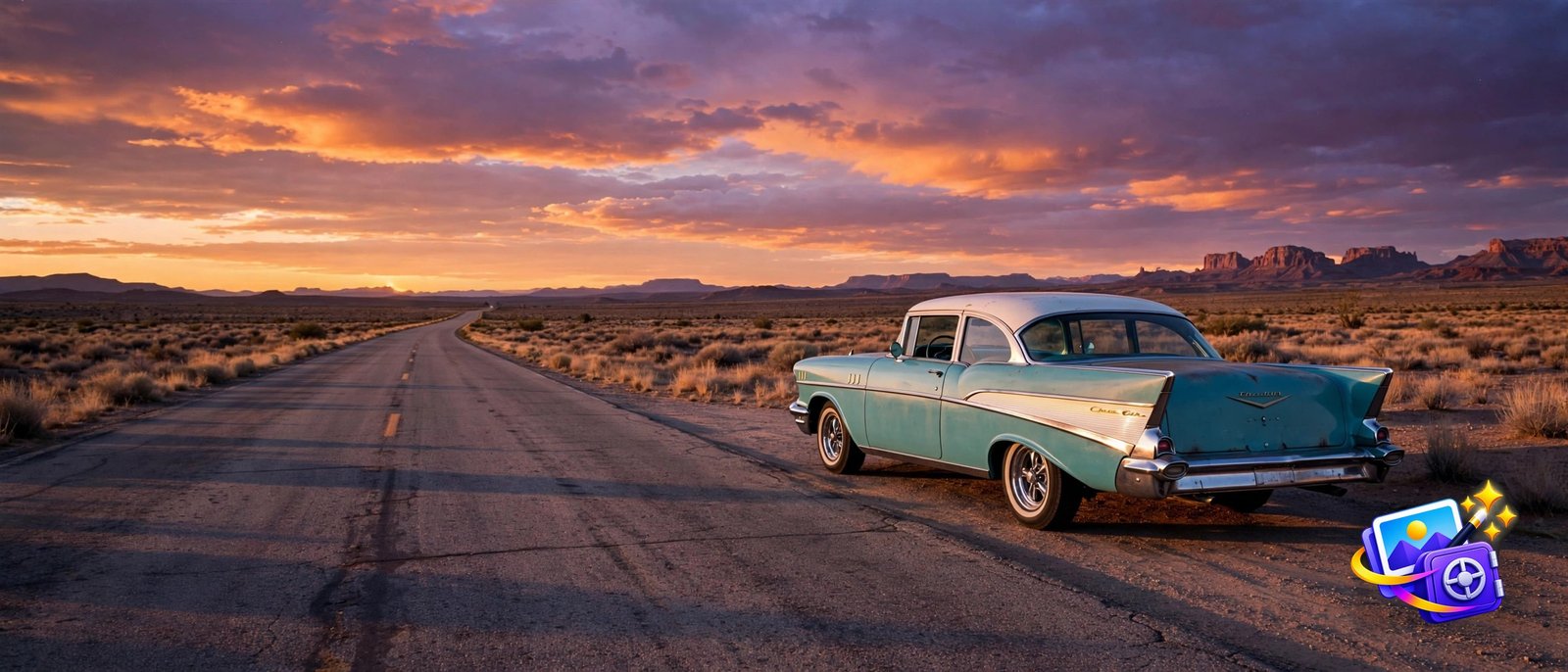
Why it works: Nostalgia is a mood, and good AI image prompts like this one build it with era + place + light: “vintage classic American car,” “empty desert road,” “sunset.” “Long shadows” is the subtle pro touch. It anchors the car in the scene with realistic late-day light instead of letting it float in a generic glow.
Modify it: Try “vintage motorcycle,” “retro camper van,” or change the setting to “coastal highway” or “neon-lit city street.”
8. Fantasy Owl at Night
The prompt:
majestic fantasy owl with glowing amber eyes perched on an ancient oak branch at night, full moon behind, enchanted misty forest, detailed digital painting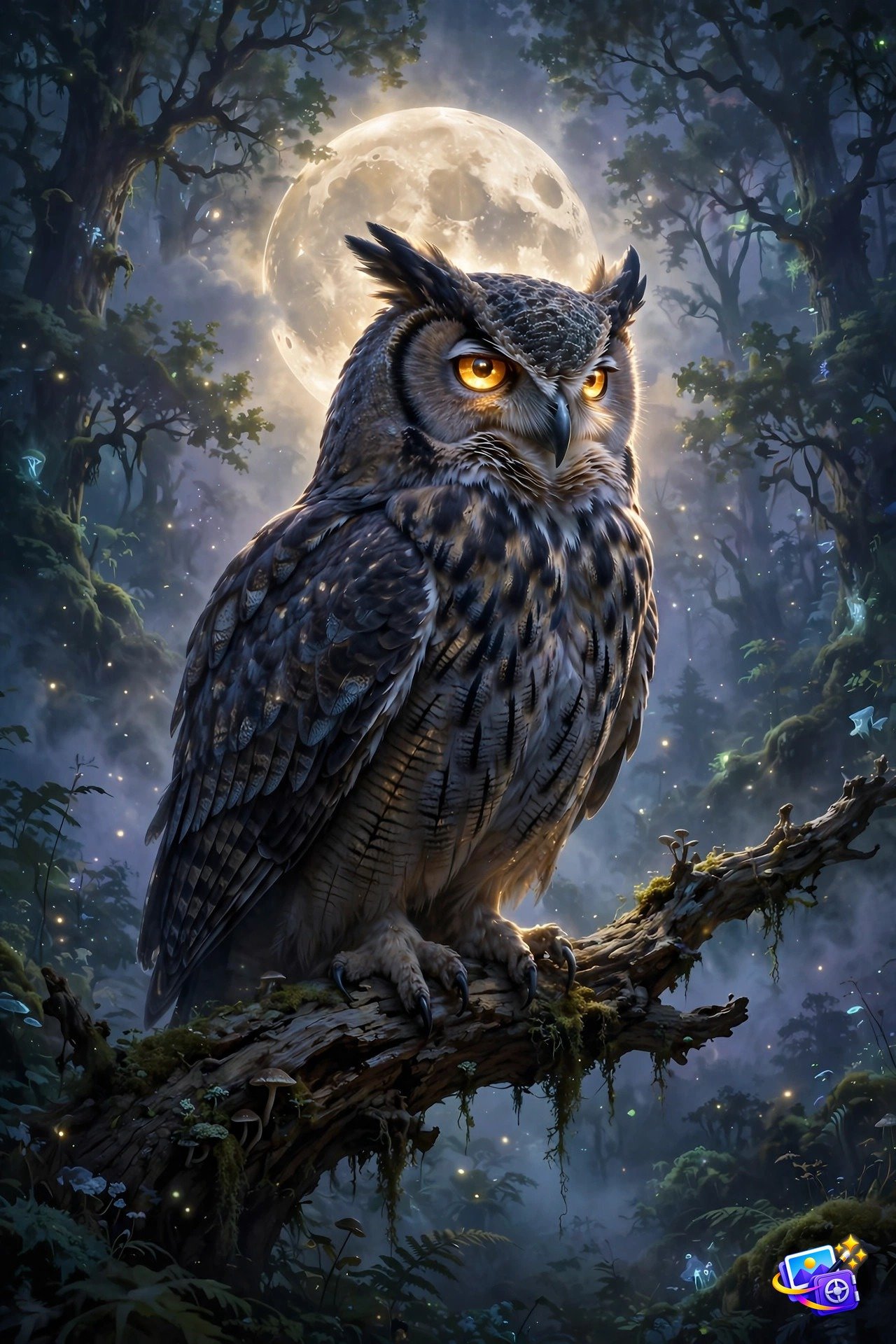
Why it works: Good AI image prompts often hinge on one glowing focal point. Here, the “glowing amber eyes” give the whole image a center of power that draws the viewer in. Layering light sources (glowing eyes + full moon + mist) creates depth in a night scene that could otherwise go muddy black. “Ancient oak” beats “tree” because specificity breeds atmosphere.
Modify it: “Fantasy wolf with glowing blue eyes,” “fantasy stag with glowing antlers.” The glowing-focal-point formula is endlessly reusable.
9. Minimalist Architecture
The prompt:
minimalist modern white concrete building with bold geometric shadows, clear blue sky, clean lines, a single small tree, professional architectural photography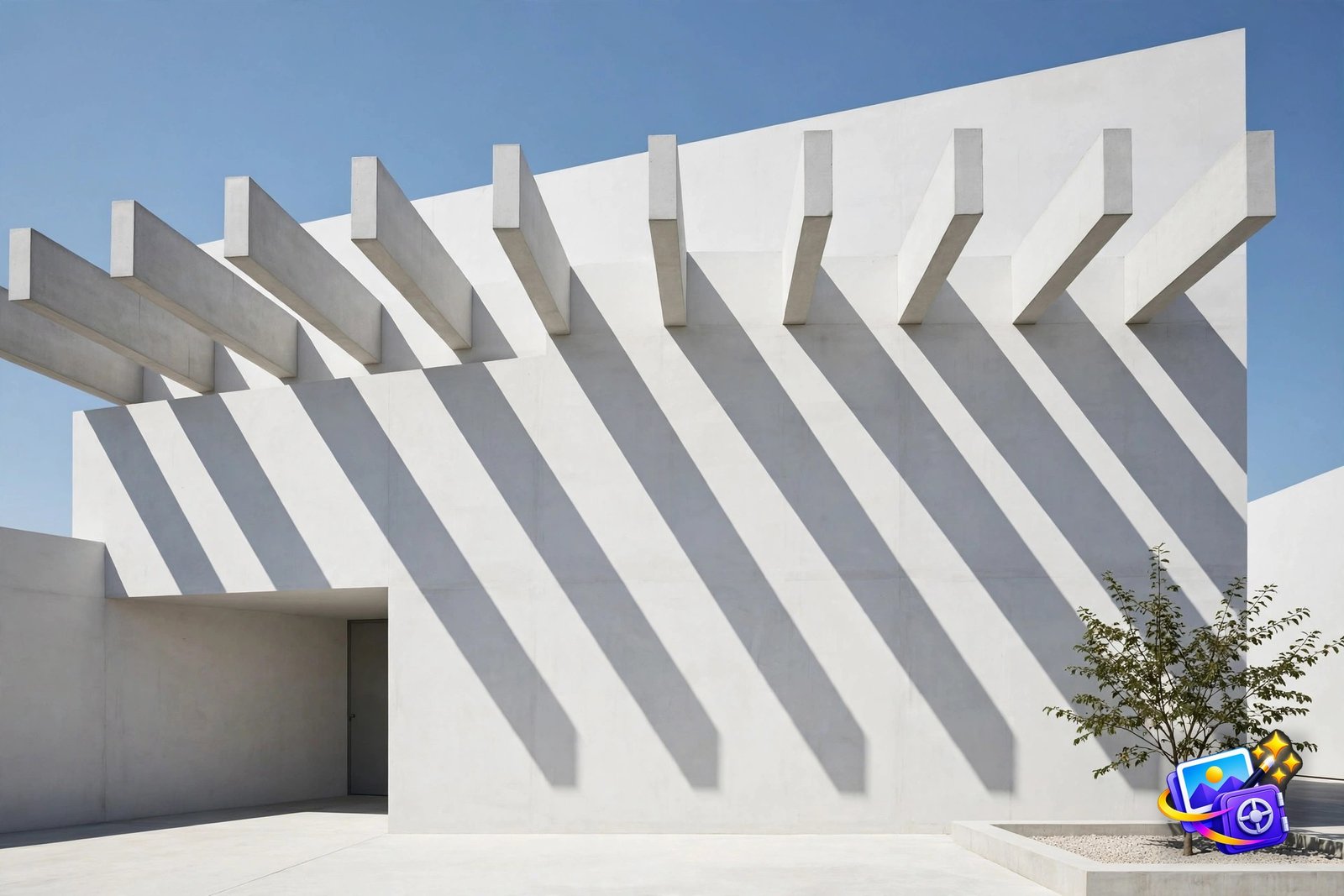
Why it works: Minimalist entries prove that the best good AI image prompts use restraint as a technique. “Bold geometric shadows” turns an empty white wall into a composition. The shadows ARE the subject. And “a single small tree” is the classic minimalism trick: one organic element that makes the geometry feel intentional rather than empty.
Modify it: Try “minimalist desert house,” “minimalist concrete staircase,” or shoot it at “blue hour” for a completely different mood.
10. Astronaut Drinking Coffee in Space
The prompt:
astronaut floating in deep space holding a steaming cup of coffee, Earth glowing blue in the background, field of stars, surreal whimsical concept art, photorealistic, wide composition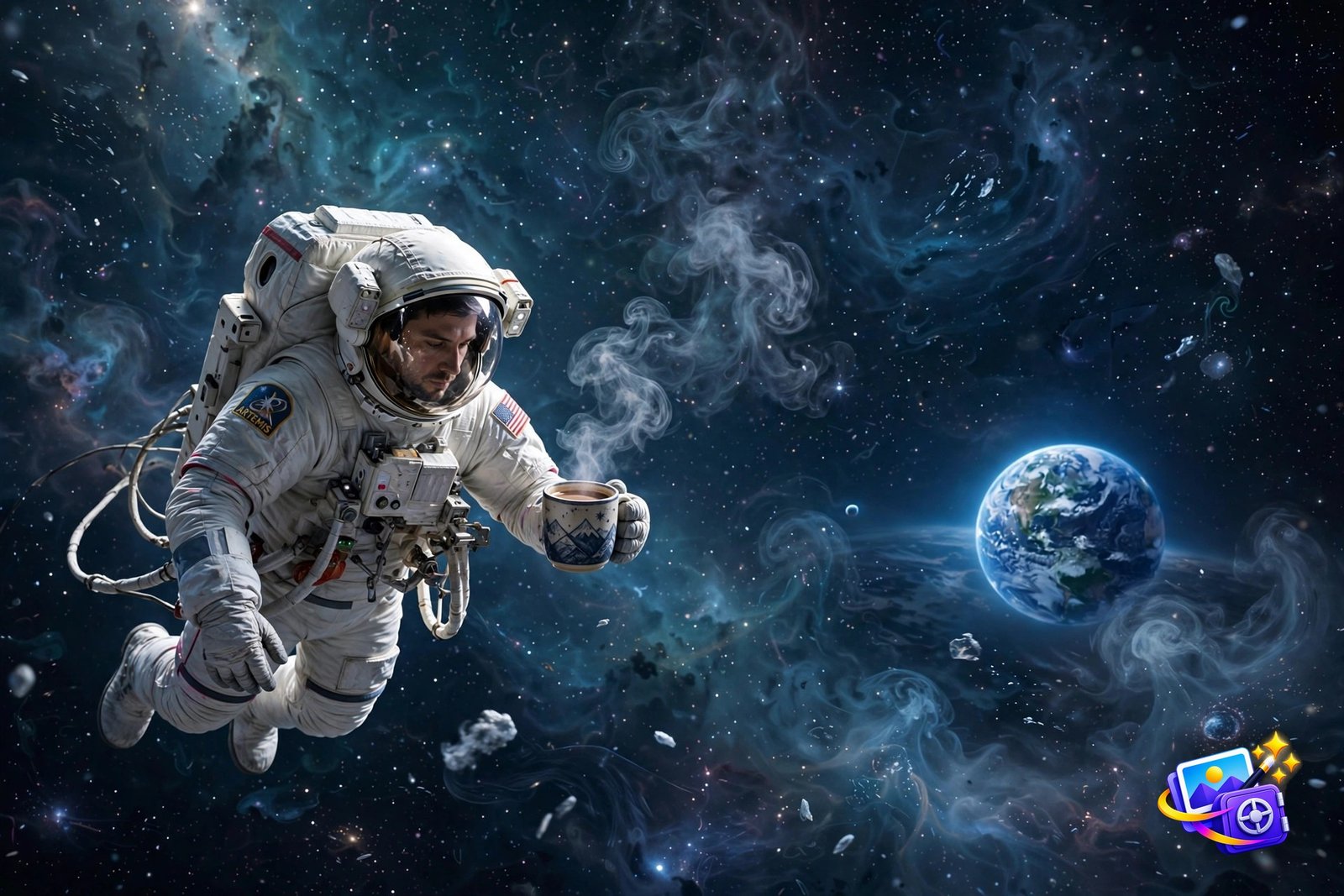
Why it works: The best good AI image prompts create delightful contradictions: the mundane (morning coffee) in the impossible (deep space). That contrast is what makes images memorable and shareable. “Steaming” adds life and motion to a static scene, and Earth’s blue glow provides the color anchor the composition needs.
Modify it: Keep the contradiction formula: “astronaut reading a newspaper on the moon,” “astronaut walking a dog in space,” “astronaut having a picnic on Mars.”
Pro Tips: The Anatomy of a Good Prompt
- Subject + style + lighting + mood. That’s the core formula. Miss one and the AI guesses, and its guesses are always blander than your specifics.
- Use concrete nouns. “Ancient oak” beats “tree.” “Brass goggles” beats “accessories.” Specificity is what separates good AI image prompts from vague ones.
- Name the light. Golden hour, neon glow, dramatic side lighting, moody rim light. Lighting words are the highest-leverage words in any prompt.
- One surprising detail wins. The glowing eyes, the steaming coffee in space, the sunrise inside a dewdrop. A single unexpected element makes an image unforgettable.
- Describe it like you’d brief a photographer. If a human couldn’t picture your scene from the words alone, add more. If they could, you’re done.
Want more inspiration? Browse our 10 cool AI image prompts for cyberpunk, synthwave, and surreal styles, and our 10 Best Midjourney Prompts for Girls for portrait-focused ideas.
To go deeper on prompt craft, the Midjourney prompt basics guide and OpenAI’s DALL-E tips are the two most authoritative references available.
Frequently Asked Questions
What makes a good AI image prompt?
A good AI image prompt names the subject, style, lighting, and mood in one to three sentences. Specific details beat vague descriptions every time.
Which AI image generator is best for beginners?
ChatGPT and Gemini are the easiest starting points, and both have free tiers. Once you are comfortable, try Midjourney for more control.
How long should an AI image prompt be?
One to three sentences, or about 30 to 60 words, is the sweet spot. Shorter prompts leave too much to chance, while longer ones dilute the key details.
Can I use the same prompt in different generators?
Yes. Every prompt in this guide uses plain language with no generator-specific syntax, so each one works in Midjourney, ChatGPT, Gemini, and Meta AI.
Why do my prompts produce different results each time?
AI image generators are non-deterministic by design. Run the same prompt a few times and pick your favorite variation.
Can I sell images made with these prompts?
It depends on the generator’s terms. Midjourney paid plans include commercial rights, while free tiers usually do not, so check the license first.
SEO Expert & Contant Writer





2 thoughts on “10 Good AI Image Prompts That Actually Work (With Examples)”